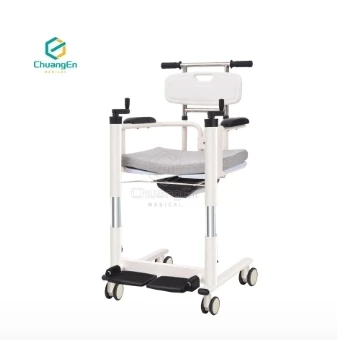
Why the carbon electric wheelchair is Becoming a Game-Changer in Mobility
Having spent many years maintaining and specifying mobility equipment in industrial contexts, I’ve developed a real appreciation for the materials and design choices that separate a good wheelchair from a truly excellent one. Oddly enough, in recent times, the emergence of carbon electric wheelchairs has felt like a quiet revolution. Lightweight, strong, and surprisingly rugged, these machines are transforming user experience in ways that frankly, I didn't fully anticipate.
First off, the shift toward carbon fiber as the main frame material, instead of traditional aluminum or steel, reflects broader trends in high-performance equipment. Carbon fiber offers an exceptional strength-to-weight ratio, meaning the wheelchair can be light enough to handle easily but still robust enough to take on day-to-day urban or indoor environments. Many engineers say this kind of material is a perfect fit because it also absorbs vibration better than metal — something users notice when on bumpy paths or rough sidewalks.
What really stands out, in real terms, is how these wheelchairs meld power and portability. Electric wheelchairs tend to be bulky; add batteries, motors, plus a sturdy frame, and you end up with a hefty machine. But with carbon fiber, the frame sheds weight, letting battery size and motor efficiency shine without overburdening the user. This balance is crucial — you want reliability and battery life, but also the ability to fold or lift the wheelchair in a pinch.
Here's a quick spec overview of a typical carbon electric wheelchair to give you a clearer picture:
| Specification | Details |
|---|---|
| Frame Material | High-modulus carbon fiber |
| Weight (empty) | Approx. 14 kg (31 lbs) |
| Max Load Capacity | 120 kg (265 lbs) |
| Top Speed | 8 km/h (5 mph) |
| Battery Range | Around 25 km (15.5 miles) |
| Folded Dimensions | 80 x 55 x 35 cm |
Frankly, when I first saw one in the field, I was skeptical about how manageable the carbon frame could be in daily rough use — especially in industrial environments where equipment gets knocked or exposed to dust and moisture. It turns out, many of these models undergo rigorous testing, including drop and fatigue testing, to ensure durability. The resin coatings applied on the carbon fiber help with weather resistance and also make maintenance straightforward — which, in my experience, is a huge plus. Nobody wants to fiddle with complicated repairs when you just need to get the job done.
Let me share a quick story: a client I worked with, who manages a manufacturing plant, initially ordered a traditional electric wheelchair. It was powerful but tough to maneuver through tight corridors. They switched to the carbon electric model about six months ago, and noticed a real difference in user independence and comfort. The lightweight frame meant the wheelchair user could fold it and store it easily when moving between floors — an improvement no one really advertised but made a big quality of life difference.
Of course, price is often a sticking point — carbon fiber isn’t cheap, and that reflects in the cost of these wheelchairs. So, here’s a vendor comparison I put together to give a snapshot of current offerings on the market:
| Vendor | Frame Material | Battery Range | Weight | Price (USD) |
|---|---|---|---|---|
| ChuangEn Medical | Carbon fiber | ~25 km | 14 kg | $3500 |
| Brand X | Aluminum alloy | 20 km | 18 kg | $2800 |
| Brand Y | Steel frame | 22 km | 22 kg | $2500 |
You know, from my vantage point, the slightly higher price for a carbon electric wheelchair from suppliers like ChuangEn Medical often pays off in the form of enhanced user experience and durability. It’s not just marketing hype; seeing it in action backed up by specs and real feedback makes a difference. And, because mobility is so deeply personal, investing in a machine that blends technology with thoughtful design really counts.
Customization options are another benefit — from adjustable seating to control interfaces tailored for different grip strengths or dexterity levels. In many ways, these carbon electric wheelchairs represent not only technological progress but a genuine nod to user-centric design.
So, if you or someone you know needs a reliable, light, yet sturdy electric wheelchair, thinking about carbon fiber options could be worthwhile. They’re kind of like the sports cars of the wheelchair world — purpose-built for performance, usability, and style. It reminds me that, sometimes, small changes in materials can open up new doors to independence.
At the end of the day, it’s about helping people move with confidence and comfort—and that's what really matters.
References:
- Industry reports on carbon fiber applications in mobility aids, 2023.
- ChuangEn Medical product testing data, internal documents, 2024.
- Customer feedback and case studies from mobility clinics, 2023–24.