Understanding the Low Air Loss Alternating Pressure Hospital Bed Mattress: Why It Matters Globally
When it comes to patient care, especially in hospitals and long-term care facilities, preventing pressure ulcers or bedsores remains a massive global challenge. Around the world, millions of patients with limited mobility suffer from these painful wounds, leading to longer hospital stays and increased healthcare costs. That’s where the low air loss alternating pressure hospital bed mattress steps in — a device designed to reduce pressure points by alternating inflation and using airflow to keep the skin dry. It’s a genuinely smart solution addressing a problem that affects healthcare systems from New York to Nairobi.
Why does understanding these mattresses matter beyond medical facilities? Because their innovation offers a window into how technology, patient comfort, and cost containment can intersect — impacting not only patients' wellbeing but also hospital efficiency globally. Plus, the tech behind these mattresses speaks to advances in materials and automation that ripple out into other industries. We’ll unpack all this, so if you ever wondered what makes a low air loss alternating pressure mattress special, you’re in the right place.
Global Context: The Role of Low Air Loss Alternating Pressure Mattresses in Healthcare
According to the World Health Organization, pressure ulcers affect roughly 10% of hospitalized patients worldwide, but the rates spike dramatically in intensive care units and nursing homes. The financial toll is staggering; the treatment of such wounds can cost hospitals between $20,000 and $50,000 per patient, not counting the profound personal suffering. It’s no wonder that in ISO’s recent healthcare standards updates (ISO 13485 for medical devices), there’s a spotlight on pressure-relieving support surfaces.
The challenge is two-fold: maintaining skin integrity for immobile patients, and doing so economically for healthcare providers who face tight budgets. The low air loss alternating pressure hospital mattress fits squarely as a frontline tech solution. Hospitals and care homes across Europe, the Americas, and Asia increasingly rely on these mattresses as part of comprehensive wound-prevention protocols.
What Is a Low Air Loss Alternating Pressure Hospital Bed Mattress?
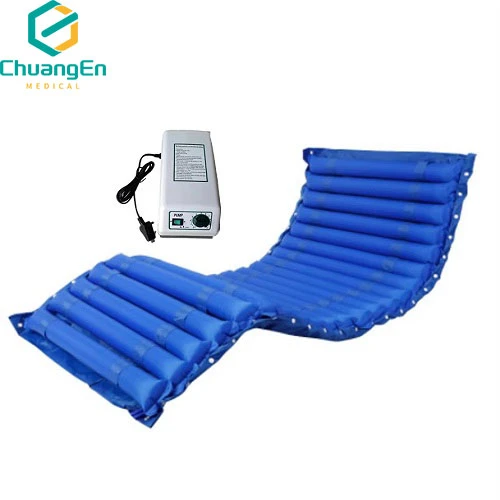
In simple terms, it’s a mattress system designed to reduce pressure on the body by periodically inflating and deflating air cells beneath the patient, while simultaneously delivering a gentle flow of air that wicks away moisture from the skin. “Low air loss” refers to this constant airflow, reducing humidity — a known factor in skin breakdown.
Put together, “low air loss” and “alternating pressure” provide a dual-action approach: the former keeps the skin dry, and the latter restores blood circulation by changing pressure points regularly. This innovation is critical not just in modern hospitals but also in humanitarian healthcare settings where immobility and poor hygiene can combine to create problematic wounds.
Key Components and Features of These Mattresses
1. Alternating Pressure Cells
The mattress contains a series of air cells or bladders that inflate and deflate in programmed cycles — often every 10 to 15 minutes — to shift pressure smoothly across the patient’s skin. It’s like having a gentle massage all night without any active effort from the patient.
2. Low Air Loss Technology
Continuous airflow passes through tiny perforations on the mattress surface, helping to keep the skin dry by dispersing moisture. Moisture control is crucial because damp skin increases the risk of friction injuries.
3. Pressure Monitoring & Custom Controls
Many mattresses come with digital pressure control units allowing caregivers to adjust firmness per patient weight and condition, plus alarms to notify if cells fail.
4. Material Durability and Hygiene
Covers are typically made from fluid-resistant, antimicrobial materials that withstand frequent cleaning without losing elasticity. Given hospital infection controls, durability is not just a feature — it’s a necessity.
5. Portability and Weight Capacity
Some models focus on lightweight construction for patient transfer ease, while still supporting up to 350 pounds or more, ensuring adaptability across patient profiles.
Mini Takeaway:
Combining these core features creates a mattress that’s practically a smart bed partner — one that actively works to protect vulnerable skin while supporting clinical hygiene and care staff effectiveness.
Typical Specifications for a Low Air Loss Alternating Pressure Mattress
| Specification | Details |
|---|---|
| Size | 80” x 36” x 8” (standard hospital bed size) |
| Weight Capacity | Up to 400 lbs (approx. 180 kg) |
| Power Requirement | 110V/60Hz or 220V/50Hz (depending on region) |
| Cycle Duration | 10–15 minutes alternating pressure cycles |
| Surface Material | Fluid-proof, antimicrobial polyurethane cover |
| Noise Level |
Global Applications and Use Cases
Hospitals worldwide have embraced these mattresses for their proven role in reducing pressure ulcers. For example, in post-disaster relief efforts — when makeshift clinics often lack proper beds — portable low air loss mattresses provide essential skin protection for injured and bedridden patients.
In aging nations like Japan and Germany, long-term care facilities rely heavily on this tech to maintain older patients’ dignity and comfort. Remote industrial sites with medical outposts, too, use these mattresses to manage workers recovering from injury, where hospital access is limited.
Hospitals in emerging markets such as India and Brazil have reported lowered incidence rates of pressure ulcers after introducing these mattresses, Cutting costs on bed sore treatments while improving patient outcomes.
Comparing Top Vendors of Low Air Loss Alternating Pressure Mattresses
| Vendor | Price Range (USD) | Warranty | Key Feature | Support & Service |
|---|---|---|---|---|
| ChuangEn Medical | $800–$1,100 | 2 years | Advanced low noise pump | 24/7 global hotline |
| MedAir Solutions | $900–$1,200 | 3 years | Customizable cycle timings | On-site maintenance |
| ComfortTech Health | $850–$1,000 | 1.5 years | Antimicrobial mattress cover | Online support resources |
Advantages and Long-Term Value of Low Air Loss Alternating Pressure Mattresses
The benefits are multiple and not just clinical. Cost-wise, hospitals save thousands by preventing pressure ulcers instead of treating them. In sustainability terms, many models are engineered for long life and easy cleaning, reducing waste. Socially, these mattresses restore dignity to vulnerable patients, enabling better rest and faster healing.
There’s also a trust factor — caregivers and patients feel reassured knowing a mattress is actively working for skin health, making those long hospital stays less psychologically daunting. This combination of practical savings and emotional comfort puts these beds in a class of their own.
Looking Ahead: Trends and Innovations in Patient Support Surfaces
From AI-enabled pressure mapping that personalizes mattress settings to eco-friendly biodegradable covers, the future seems promising. Some manufacturers are integrating IoT (Internet of Things) — allowing nurses to monitor mattress status remotely through mobile apps. Then there’s the increasing push towards energy-efficient, low-power pumps, which is crucial in off-grid or resource-limited regions.
Frankly, it’s a bit exciting to see how what once was just “a mattress” has morphed into a high-tech patient-care device that marries comfort, health, and digital innovation.
Challenges and Smart Solutions
Of course, no product is perfect. Some challenges include power dependency — losing electricity means loss of alternating pressure function — and initial cost barriers for less funded clinics. Plus, repairs and replacements require logistical planning.
Innovative companies offset these risks with battery backups, modular designs for quick component replacement, and remote diagnostics. Training healthcare staff on correct setup ensures long-lasting performance. It essentially boils down to integrating tech with human know-how — a bit like every medical innovation in history.
Frequently Asked Questions about Low Air Loss Alternating Pressure Hospital Bed Mattresses
- Q: How often should the mattress cycles be adjusted for different patients?
A: Most mattresses come preset to cycle every 10-15 minutes, but settings can be adjusted based on patient weight, skin condition, and clinical recommendations. Customizing improves comfort and therapy effectiveness. - Q: Can these mattresses be used for home care?
A: Absolutely. Many manufacturers offer versions suited for home use with quieter pumps and simplified controls, helping caregivers prevent pressure sores outside traditional hospital settings. - Q: What maintenance is required to keep the mattress effective?
A: Routine cleaning of the cover with approved disinfectants and periodic checks of the pump and valves are needed. Preventative maintenance extends mattress life and ensures proper performance. - Q: Are these mattresses compatible with all hospital bed frames?
A: Most are designed to fit standard hospital beds (typically 36” x 80”), but double-check sizing before ordering to ensure compatibility. - Q: How quiet are low air loss alternating pressure mattresses in operation?
A: Modern units operate at noise levels below 30 decibels, roughly equivalent to a whisper, so they rarely disturb sleep or caregiving routines.
Conclusion: Invest in Comfort, Care, and Cost-Efficiency
Taking everything into account, the low air loss alternating pressure hospital bed mattress embodies the perfect balance of innovation and practicality. It safeguards vulnerable patients, reduces healthcare costs, and enhances caregiver confidence — all big wins. If you’re involved in patient care or healthcare facility management, it’s tough to overlook the long-term value these mattresses bring.
For more details on specifications and ordering, visit our website: low air loss alternating pressure hospital bed mattress.
Quick Summary Takeaway:
From mitigating the costly effects of pressure ulcers to improving quality of life, these mattresses represent a small investment with outsized returns for patients and providers globally.
References
- World Health Organization. Pressure ulcers: Prevention and management. 2022. WHO Fact Sheet
- ISO 13485:2016 - Medical devices — Quality management systems. ISO Organization
- National Pressure Ulcer Advisory Panel. NPUAP Resources