Are aluminum underarm crutches still the smart buy in 2025?
Short answer: usually yes—though I’ve been pleasantly surprised by a newer stainless option. If you’re scanning catalogs, you’ll see plenty of aluminum underarm crutches because they’re light, affordable, and easy to size. However, for rental fleets or heavier users, thick-walled stainless can actually make operational sense (less downtime, fewer bent tubes). I’ve toured a few factories in Hebei and Ningbo over the years; the better plants balance weight with durability and, to be honest, testing rigor is what separates the good from the “get-what-you-pay-for.”
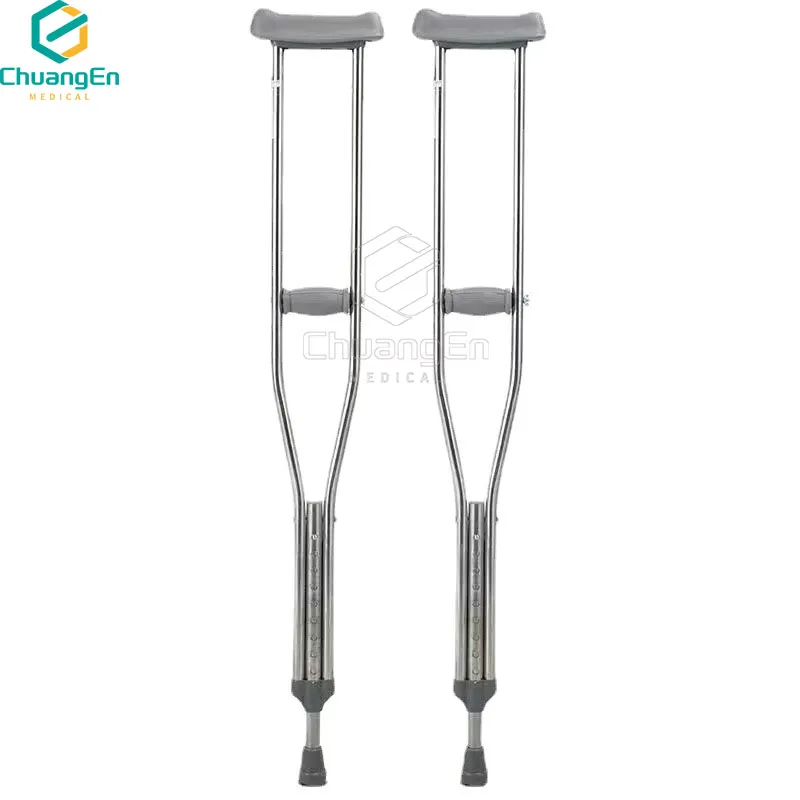
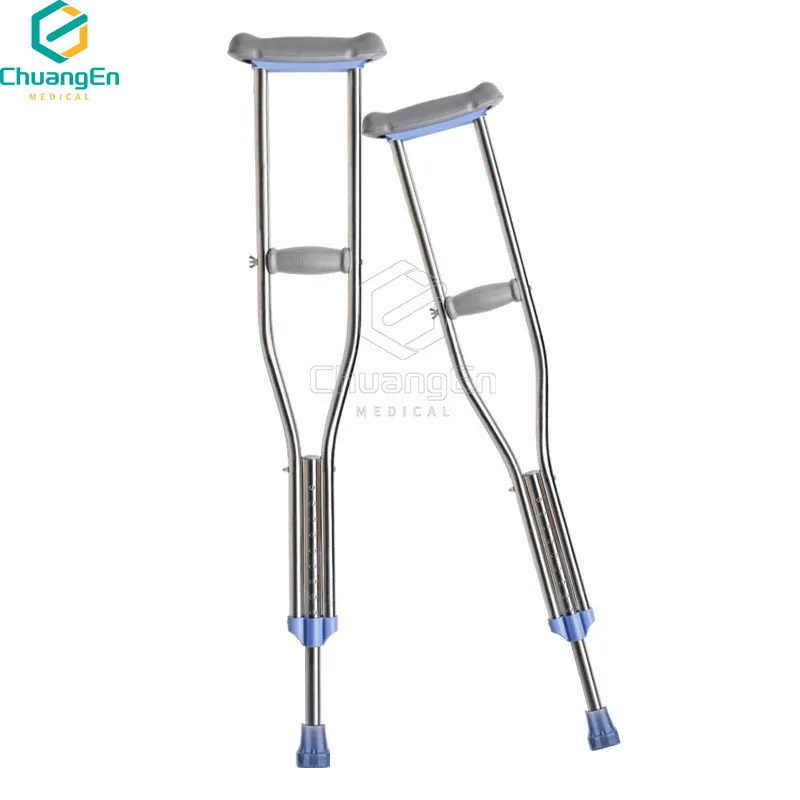
Product spotlight: CS-01S stainless telescopic underarm crutches
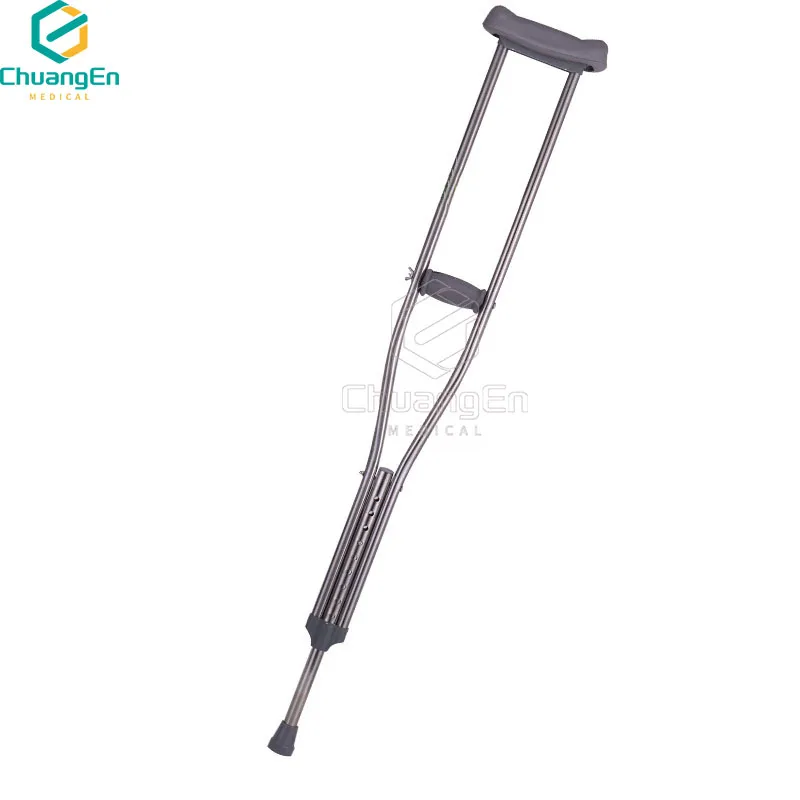
From Chuangen Medical (No.65, Tiangui Street, High Technology Industrial Development Zone, Shijiazhuang, Hebei, China), the CS-01S brings thickened stainless steel tubing, a widened rubber non-slip tip, and soft axillary pads. MOQ is 10 pairs—friendly for clinics and regional distributors testing a new line.
Industry trend check
- Weight vs. stiffness: aluminum remains the volume leader; stainless is taking share in rental/insurance channels due to lower bend/failure rates.
- Compliance-first purchasing: more buyers now ask for ISO/EN test reports and biocompatibility docs for pads and grips.
- Customization surge: colors, laser logos, and ergonomic pads for long-term users—yes, people want nicer-looking aids.
Spec snapshot (CS-01S)
| Frame material | Thickened stainless steel (factory-confirmed) |
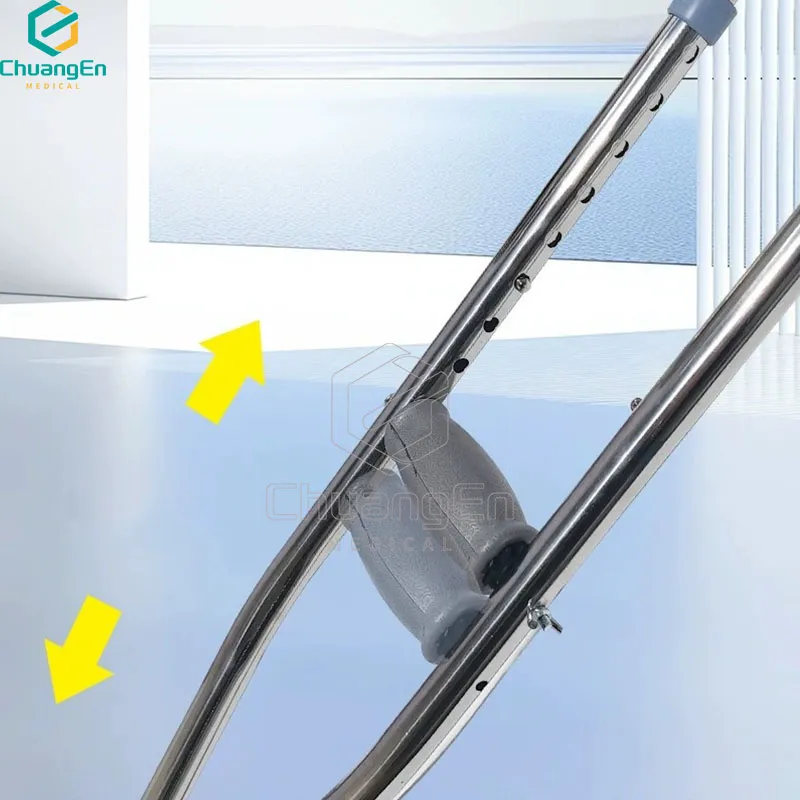
| Height adjustment | Telescopic with dual-spring pins; typical adult range ≈ S/M/L (real-world use may vary) |
| Tip | Widened anti-slip rubber, embedded washer |
| Pads/handles | Soft axillary pads; comfort grips |
| Load capacity | ≈ 130 kg user mass (internal test; check final report) |
| MOQ | 10 pairs |
Process and testing (how the good ones are made)
Materials: 304/201 stainless or 6061-T6 aluminum (for aluminum underarm crutches). Methods: precision tube cutting, TIG welding at stress points, riveted sleeves, surface passivation (stainless) or anodizing (aluminum). Pads use PU or TPR; tips are vulcanized NR blends with a steel washer. QC flow: incoming hardness and wall-thickness checks → jig-based alignment → 100% height-pin engagement check → salt spray (where specified) → functional tests.
Typical lab results we’ve seen (representative): static axial load ≥ 1,500 N without permanent deformation; fatigue 100,000 cycles at 500 N; tip slip resistance coeff. ≥ 0.6 on dry tile. Compliance targets include ISO 11199-1 and EN 12182; pad materials screened to ISO 10993 for skin-contact safety.
Where they’re used (and why)
- Hospitals and DME retailers: fast sizing, low training burden.
- Rental fleets and insurers: stainless variants reduce bend-related returns.
- Sports medicine and workplace injury programs: patients like the lighter feel of aluminum underarm crutches; stainless for high-BMI users.
Service life: ≈ 3–5 years home use; rental fleets often refurbish tips/pads every 6–9 months. Many customers say grip comfort matters more than they expected—worth upgrading.
Vendor comparison (quick look)
| Vendor/Model | Frame | Certs (typ.) | MOQ | Lead time | Notes |
|---|---|---|---|---|---|
| Chuangen CS-01S | Thickened stainless | ISO 13485, ISO 11199-1 test report (on request) | 10 pairs | ≈ 20–30 days | Durable for fleets |
| Generic A (Alu) | 6061-T6 aluminum | EN 12182, CE MDR | 100 pairs | ≈ 25–35 days | Lightweight, classic |
| Brand B Rental Pro | Stainless/aluminum hybrid | ISO 10993 pads; ISO 11199-1 | 50 pairs | ≈ 30–40 days | Heavier, very robust |
Customization and real cases
Common customizations: logo engraving, anodized color (for aluminum underarm crutches), antibacterial pads, retail packaging, extended sizes. One rehab chain in the Gulf swapped to stainless for bariatric users and reported a 27% drop in damage returns over two quarters. Another EU distributor moved to wider tips and saw fewer slip complaints on polished hospital floors—small tweak, big win.
Bottom line
If you want light and quick to stock, go with aluminum underarm crutches. If your priority is ruggedness and fewer bends in rentals, the CS-01S stainless is a practical, surprisingly cost-effective alternative—especially at an MOQ of 10 pairs.
Authoritative citations
- ISO 11199-1:2019, Walking aids manipulated by one arm—Requirements and test methods—Part 1.
- EN 12182:2021, Assistive products for persons with disability—General requirements and test methods.
- ISO 10993 series (Biological evaluation of medical devices), Parts 5 and 10 for pads/tips in skin contact.
- ISO 13485:2016, Medical devices—Quality management systems—Requirements for regulatory purposes.
- EU MDR 2017/745, Annex I safety and performance requirements for non-powered assistive devices.