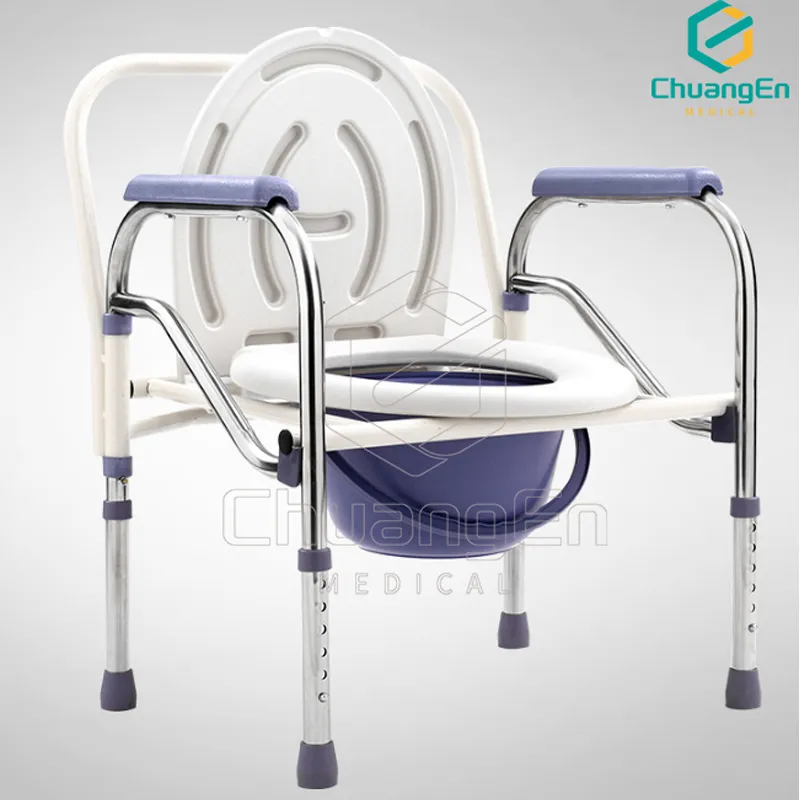
Field Notes on a Modern Mobility Workhorse: the patient lift and transfer chair
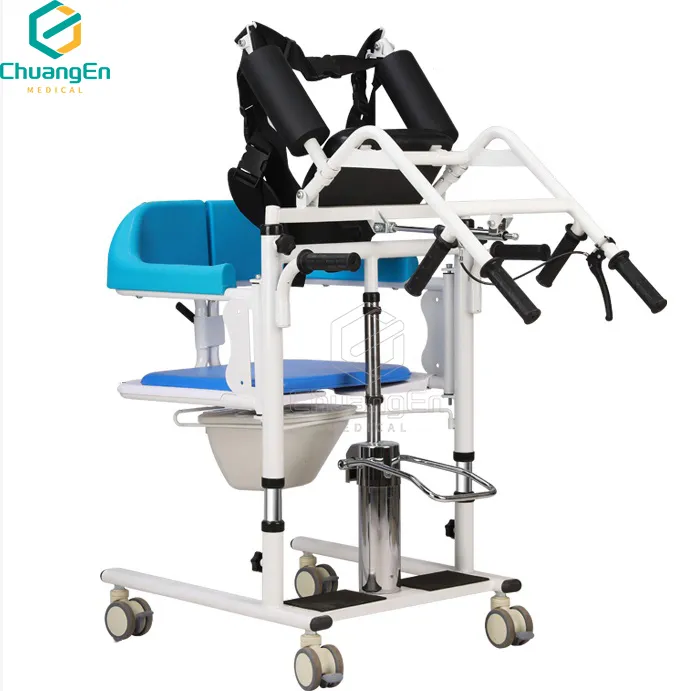
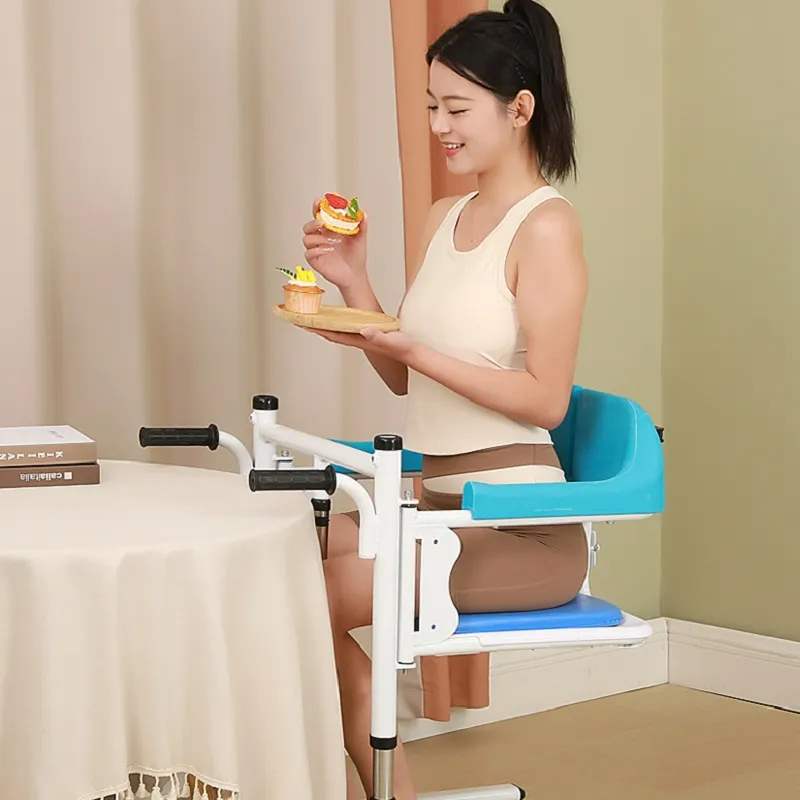
If you spend any time in home care or long-term facilities, you know the quiet heroes aren’t always the flashy robotics. Often it’s the dependable hydraulic rigs that do the hard work. Case in point: the CZY-Y04 Hydraulic Disabled Patient Transfer Chair With Commode from Chuangen Medical—built in Shijiazhuang, Hebei, China. I visited their street once—No.65, Tiangui Street, a practical industrial zone with no fuss. Fitting, honestly.
What’s trending (and what actually matters)
Aging in place is accelerating, and so is staffing pressure. Facilities want fewer transfers per caregiver, smoother rolling, and devices that don’t need a wall socket. That’s why hydraulic systems still hold ground—predictable, lower maintenance, and surprisingly quick when the floor is busy. Many customers say they prefer the tactile control: lift as fast as your hand says, not as fast as a motor decides.
Spotlight: CZY-Y04 key points
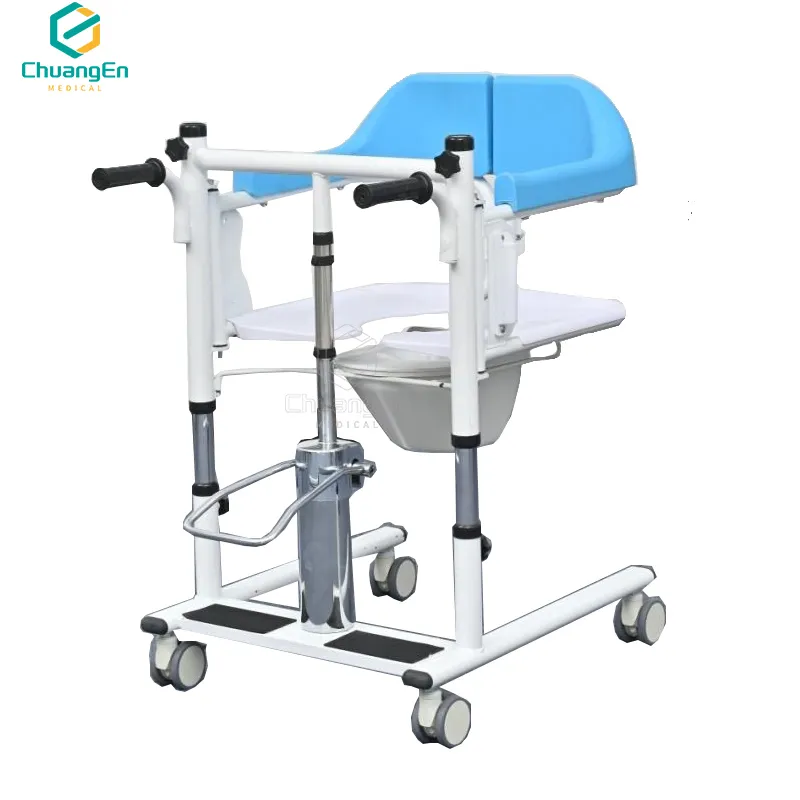
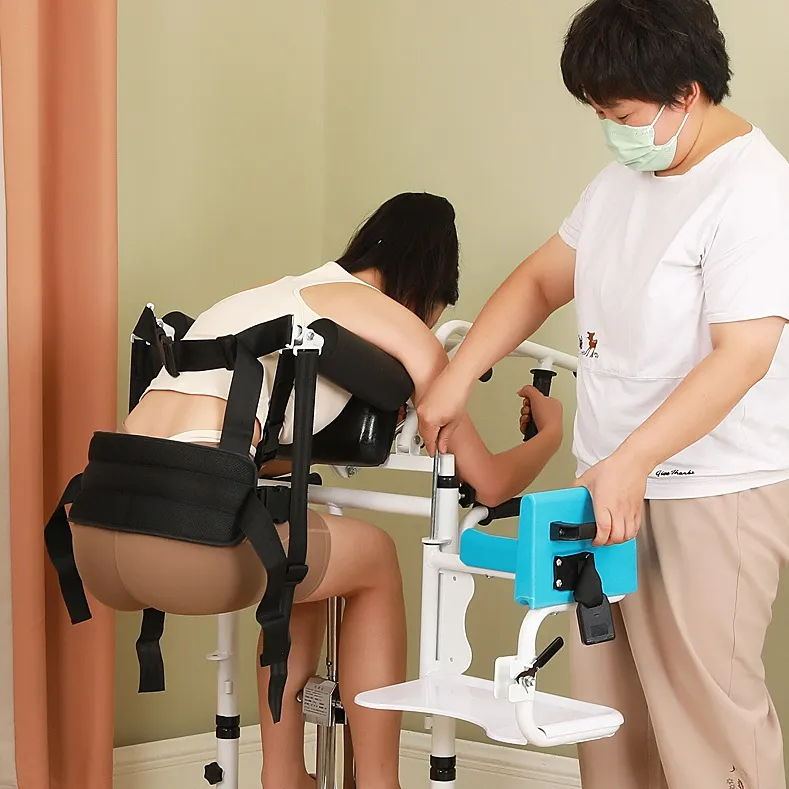
- Includes auxiliary lift bracket for steady, guided motion
- Free height adjustment via hydraulic pump; no charging downtime
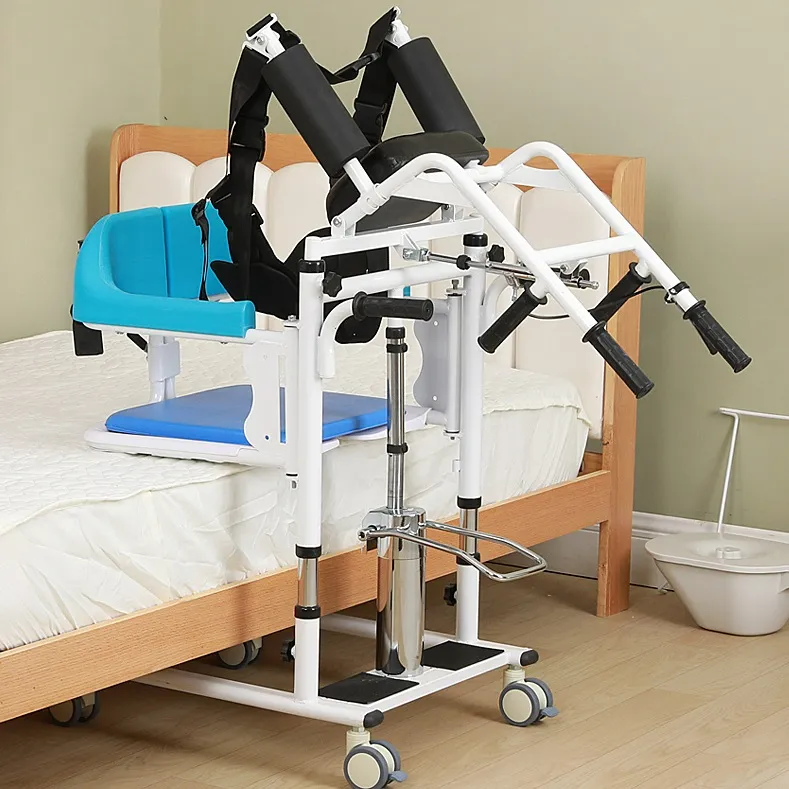
- 180° open design to slide around beds, toilets, wheelchairs—actually helpful in tight rooms
- Commode-ready, so night shifts don’t juggle two devices
- MOQ: 1 piece (nice for pilot trials or home use)
Typical specifications (real-world use may vary)
| Safe working load (SWL) | ≈150 kg (330 lb) |
| Seat height range | ≈45–72 cm |
| Hydraulic lift stroke | ≈250 mm |
| Frame | Powder‑coated steel; welded joints |
| Opening angle | 180° |
| Seat width | ≈45 cm |
| Castors | 5″ with total/directional lock |
| Net weight | ≈28 kg |
| Warranty | 12 months standard |
Where it earns its keep
Home care apartments, rehab wards, and small clinics that can’t spare a wall charger every few hours. Transfers bed-to-chair, chair-to-commode, and even narrow bathroom runs. To be honest, a patient lift and transfer chair like this finds its way into hospice units too—quiet, predictable, safe.
Process, testing, and service life
Materials: high‑tensile steel tubing, powder coat; PU wheels; PP commode bucket. Methods: TIG/MIG welding; jigs for frame alignment; pump assembly and bleed; 100% functional checks. Testing typically follows ISO 10535 for lifts and transfer devices, including:
- Static load: ≥1.5× SWL for 10 minutes (no deformation)
- Dynamic cycling: ≥4,000 lift cycles
- Brake/roll resistance and stability checks
- Corrosion resistance: ≈48 h salt‑spray on coated parts
Facilities commonly operate a patient lift and transfer chair for ≈5–7 years with routine inspection (monthly bolts and casters check; annual hydraulic seal review). Production is typically under an ISO 13485 QMS, with CE/MDR conformity for applicable markets and user manuals aligned to ISO 15223-1 symbols.
Quick vendor comparison (indicative)
| Factor | Chuangen CZY-Y04 | Vendor A (Electric) | Vendor B (Hydraulic) |
|---|---|---|---|
| Lift type | Hydraulic | Electric/battery | Hydraulic |
| SWL | ≈150 kg | ≈160–180 kg | ≈130–150 kg |
| Power need | None | Battery/charger | None |
| Commode-ready | Yes | Model-dependent | Model-dependent |
| MOQ | 1 pc | 10–50 pcs | 5–20 pcs |
| Customization | Color/logo, seat width, wheels | Limited | Moderate |
Customization, use cases, and feedback
Options often requested: wider seat pans, IV pole bracket, softer arm pads, antimicrobial upholstery, and low-noise wheels. One rehab unit told me their patient lift and transfer chair cut average transfer time by “about a third”—anecdotal, sure, but echoed elsewhere. A home caregiver I spoke with liked the 180° opening: “It hugs the toilet instead of fighting it.”
Final take
Not every ward needs an electric hoist. Sometimes reliability, quick deployment, and commode integration are king. The CZY‑Y04 is that pragmatic choice—good bones, sensible spec, and it doesn’t ask for a charger.
Citations
- ISO 10535: Hoists for the transfer of disabled persons — Requirements and test methods. https://www.iso.org/standard/52960.html
- World Health Organization: Ageing and health (fact sheet). https://www.who.int/news-room/fact-sheets/detail/ageing-and-health
- European Commission: Medical Devices Regulation (EU) 2017/745 — General Safety and Performance Requirements. https://health.ec.europa.eu/medical-devices-sector/new-regulations_en