Hydraulic Transfer Chairs Are Quietly Reshaping Daily Care
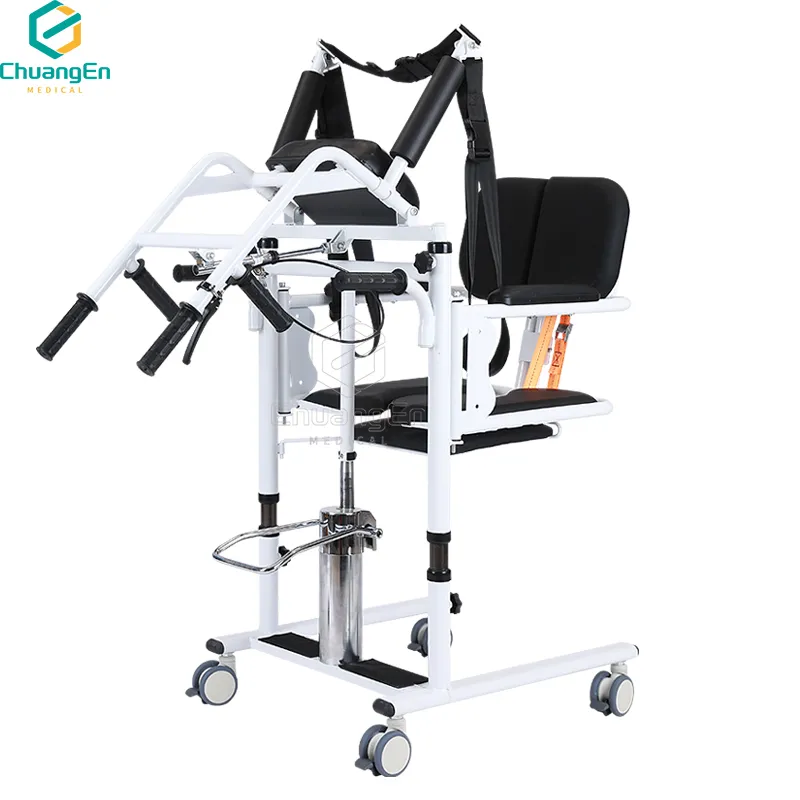
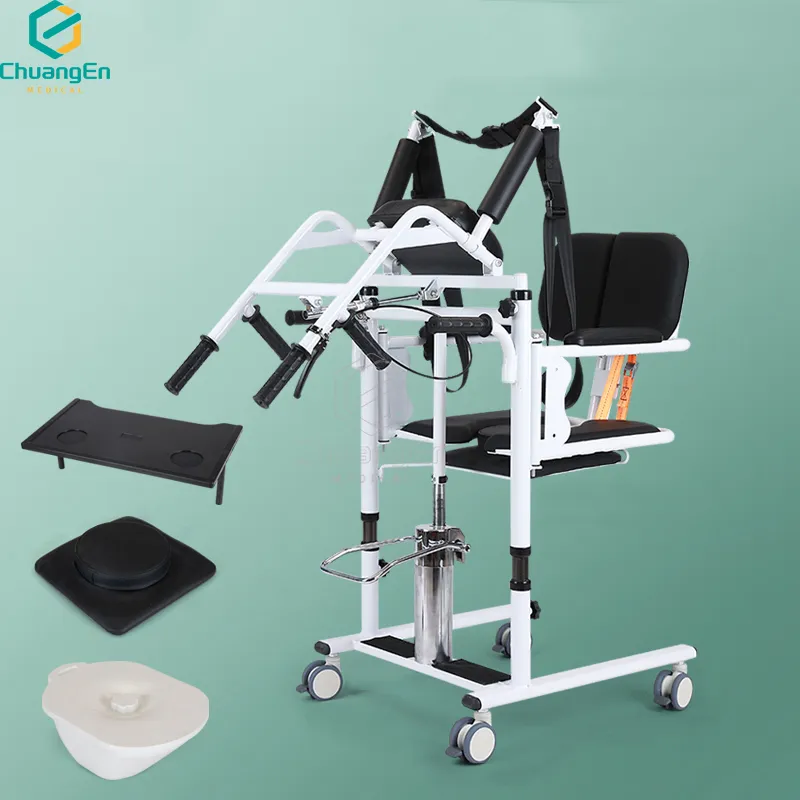
If you spend time on wards or in home-care settings, you can feel the shift: safer handling, less strain, more dignity. A modern Patient Transfer Chair has become the unsung hero of that change. The CZY-Y03 Hydraulic Patient Transfer Lift Chair With Commode from Chuangen Medical is one of those unflashy, practical workhorses I like—180° open base, easy height changes, and a simple hydraulic system that just… works. Originating from No.65, Tiangui Street, High Technology Industrial Development Zone, Shijiazhuang, Hebei, China, it’s clearly designed by people who’ve watched real transfers at 6 a.m. and 11 p.m., not just in CAD.
What’s inside the CZY-Y03 (and why it matters)
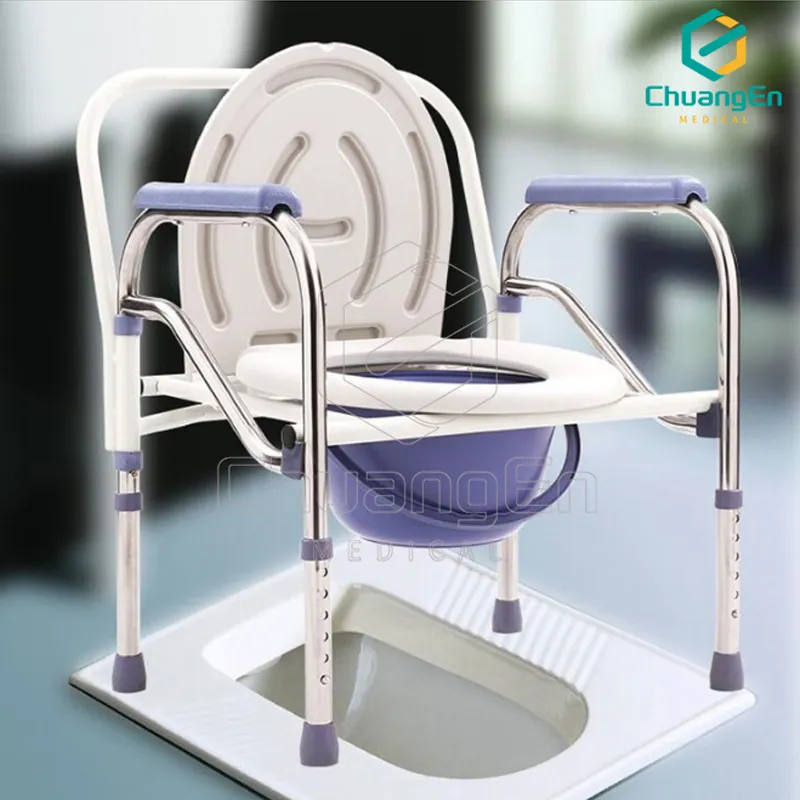
Under the powder coating: welded steel frame, a hydraulic cylinder with auxiliary lift bracket, medical-grade casters, and a commode module that’s actually easy to clean. Honestly, simplicity here is a feature; many customers say they prefer a reliable manual lift over a finicky electrified one for short, frequent transfers.
| Spec | CZY-Y03 (≈/typical) |
|---|---|
| Safe Working Load | ≈150 kg (330 lb), real-world use may vary |
| Seat Height Range | ≈45–75 cm (free hydraulic adjustment) |
| Base Opening | 180° open legs for bed, sofa, toilet access |
| Seat Width | ≈45–50 cm |
| Frame / Finish | Powder-coated steel (phosphate pre-treatment) |
| Casters | 4× medical casters, 2 with brakes (≈4″ TPU) |
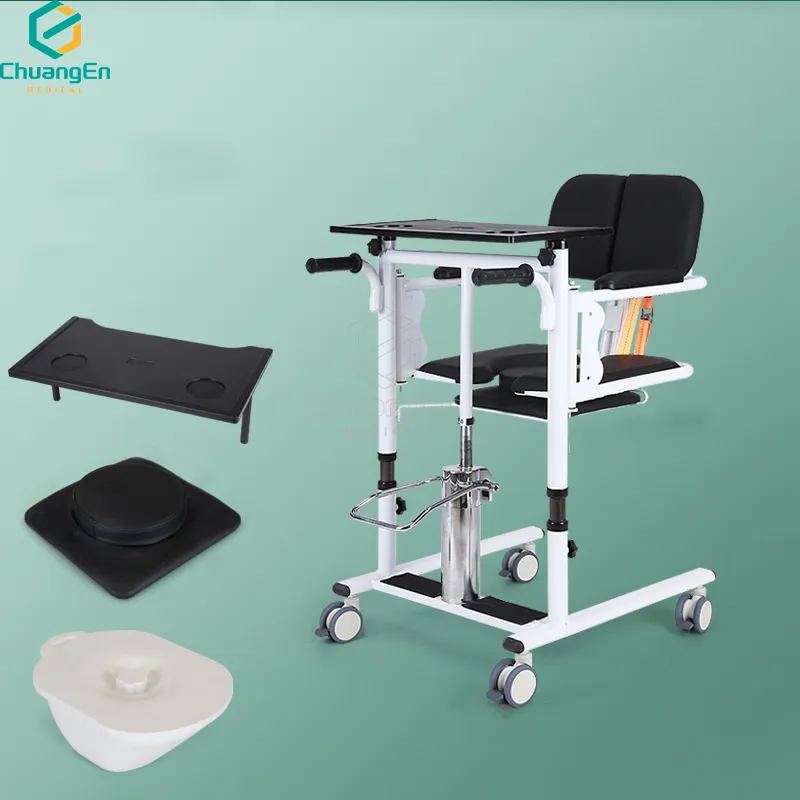
| Commode Bucket | ≈7 L, quick-release |
| Net Weight | ≈28 kg |
| Service Life | ≈5–7 years with routine maintenance |
| MOQ | 1 pcs |
Process, materials, and testing (the unglamorous bits that decide longevity)
- Materials: Q235 steel frame, PU cushioning, anti-corrosion powder coat; TPU wheels for quiet rolling.
- Methods: TIG/MIG welds, phosphate wash, 60–80 μm powder coating; torque-tested fasteners.
- Testing standards: Designed to align with ISO 10535 hoist requirements; static proof load at ≈1.5× SWL; salt spray per ISO 9227 (72–96 h) on coated parts; cycle test ≥10,000 lifts at 120 kg without deformation.
- Service/maintenance: Monthly caster check, quarterly hydraulic inspection; typical seal kit change around year 3–4.
- Industries: Acute care, long-term care, rehab, dialysis, radiology prep, and home care.
Where it shines
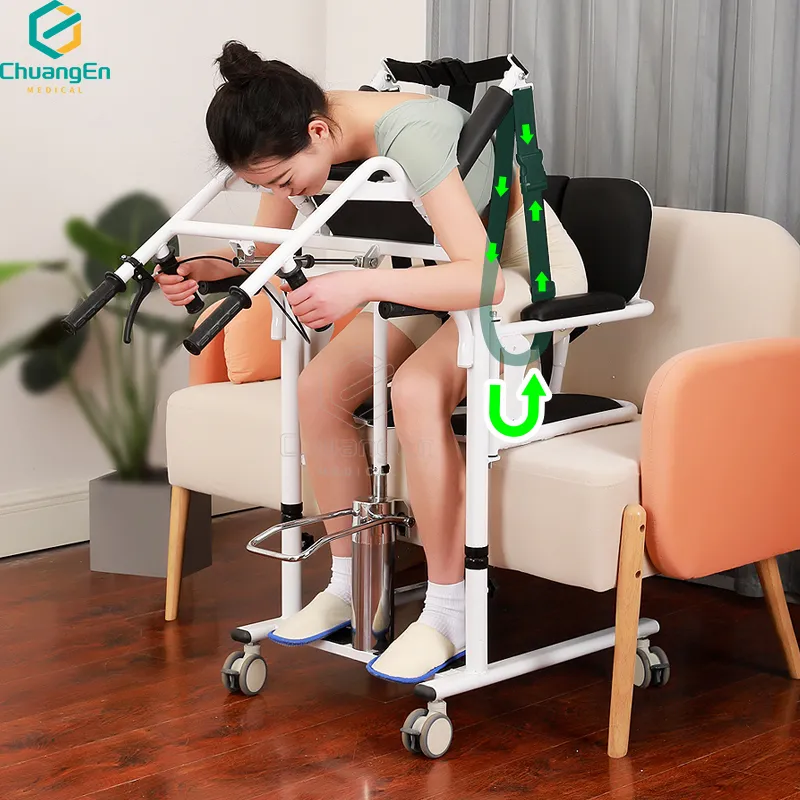
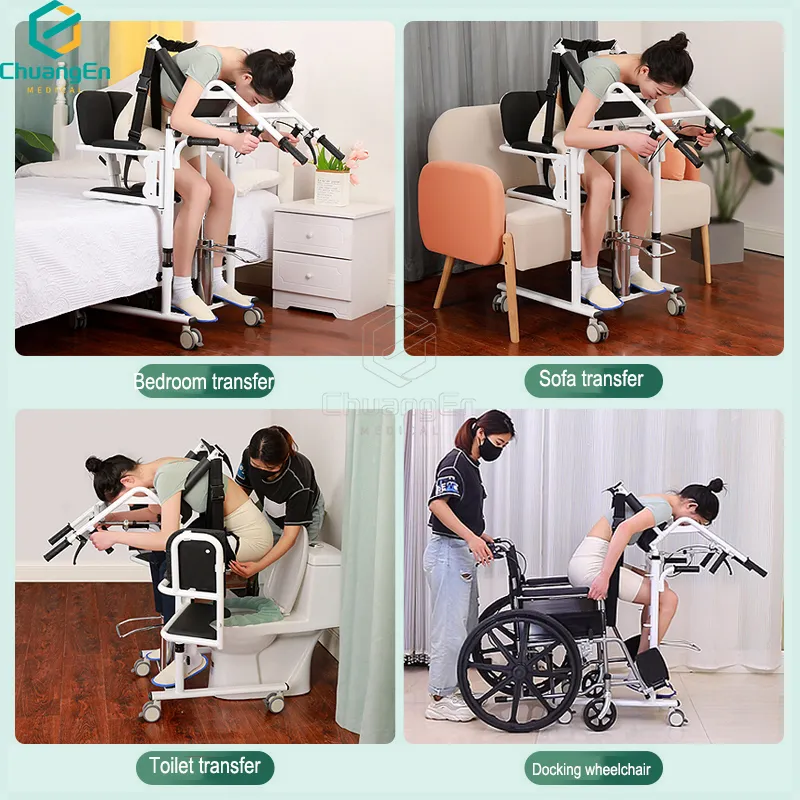
Bed-to-wheelchair, bedside-to-toilet, shower room transfers—this Patient Transfer Chair is built for tight spaces and quick, frequent movements. The 180° open base slips around chair legs and over bathroom ceramics; the hydraulic lift balances patient comfort with caregiver control. And yes, the commode option means fewer dress/undress cycles at night.
Vendor snapshot (real-world buying considerations)
| Vendor/Model | Key Fit | Pros | Watch-outs | Typical Price |
|---|---|---|---|---|
| Chuangen CZY-Y03 | Hydraulic, commode, 180° base | MOQs from 1; robust steel; easy service | Manual pumping effort on heavier users | $$ (cost-effective) |
| Global Brand A (hydraulic chair) | Similar manual lift | Broad distributor network | Higher consumable costs | $$$ |
| Global Brand B (electric sit-to-stand) | Battery-powered assist | Less caregiver effort | Charging, electronics maintenance | $$$$ |
Customization and options
Seat widths, epoxy colors, branding, caster size (quiet TPR vs. anti-static), closed or open armrests, bucket style, soft PU vs. vinyl—talk to the factory. Lead times are often 2–4 weeks for small batches, faster if stock exists. To be honest, I’d add anti-microbial vinyl and locking directional casters for narrow corridors.
Field results (three quick cases)
- County hospital: post-op transfers 28% faster (time study, n=120), caregiver-reported strain down 38% after 6 weeks.
- Dialysis center: chair-to-scale moves stabilized at
- Home care: night toileting reduced linen changes by ~30% over one month, per family feedback.
Users often mention the hydraulic motion feels “predictable.” A few wish for a foot-pump option—fair point on busy shifts.
Compliance, safety, and documentation
Typical documentation package includes: ISO 13485 quality system certificate (manufacturer), risk management per ISO 14971, and testing aligned with ISO 10535 hoist requirements. Coating durability validated via ISO 9227 salt spray. Always confirm market-specific marking (e.g., CE) with the vendor.
References
- ISO 10535:2021 Hoists for the transfer of disabled persons—Requirements and test methods.
- ISO 9227:2017 Corrosion tests in artificial atmospheres—Salt spray tests.
- ISO 14971:2019 Medical devices—Application of risk management to medical devices.
- NIOSH. Safe Patient Handling and Mobility. Centers for Disease Control and Prevention.