Look, hospital air mattresses for sale… it's not glamorous work, you know? Been doing this for fifteen years, and you see a lot of changes. Lately, everyone’s talking about patient comfort, pressure redistribution – fancy terms, really. It all boils down to preventing bedsores, right? But the biggest trend I'm seeing is demand for quicker deployment and better infection control. Hospitals are stretched thin, and they need things now. And they need to be absolutely spotless.
To be honest, a lot of manufacturers get tripped up on the details. They focus so much on the air cells and the pump – which, yeah, are important – that they forget about the practicalities. Like, how easy is it to clean? How durable is the material when you're constantly wiping it down with disinfectant? I’ve seen mattresses where the vinyl just starts peeling after a few weeks. Nightmare.
And the weight! You wouldn’t believe how many people design these things without thinking about the nurses who have to move them. It's a physically demanding job already.
The Current Landscape of hospital air mattress for sale
Honestly, the market’s gotten crowded. Too many players are chasing the same low price point, and quality suffers. You see a lot of PVC being used, which is cheap, but it smells awful and gets brittle quickly. It cracks easily. I prefer the polyurethane ones – they’re a bit more expensive, but they’ve got a softer feel and hold up to the harsh chemicals hospitals use. And they don't reek of plastic!
Have you noticed how everyone's trying to add "smart" features? Pressure mapping, remote adjustments… It's good stuff, don't get me wrong, but it adds complexity. More things to break. And it needs training. Nurses are busy enough as it is.
Defining Hospital Air Mattresses: Beyond the Basics
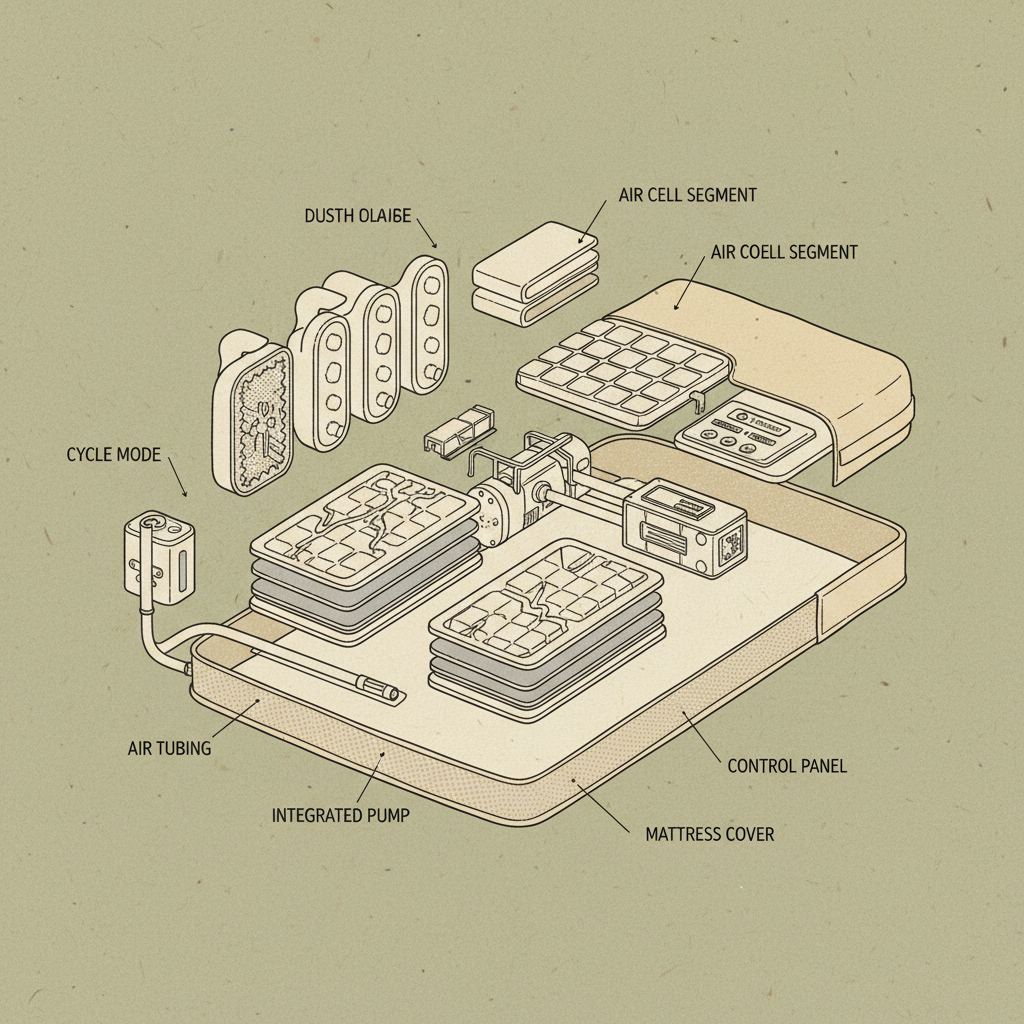
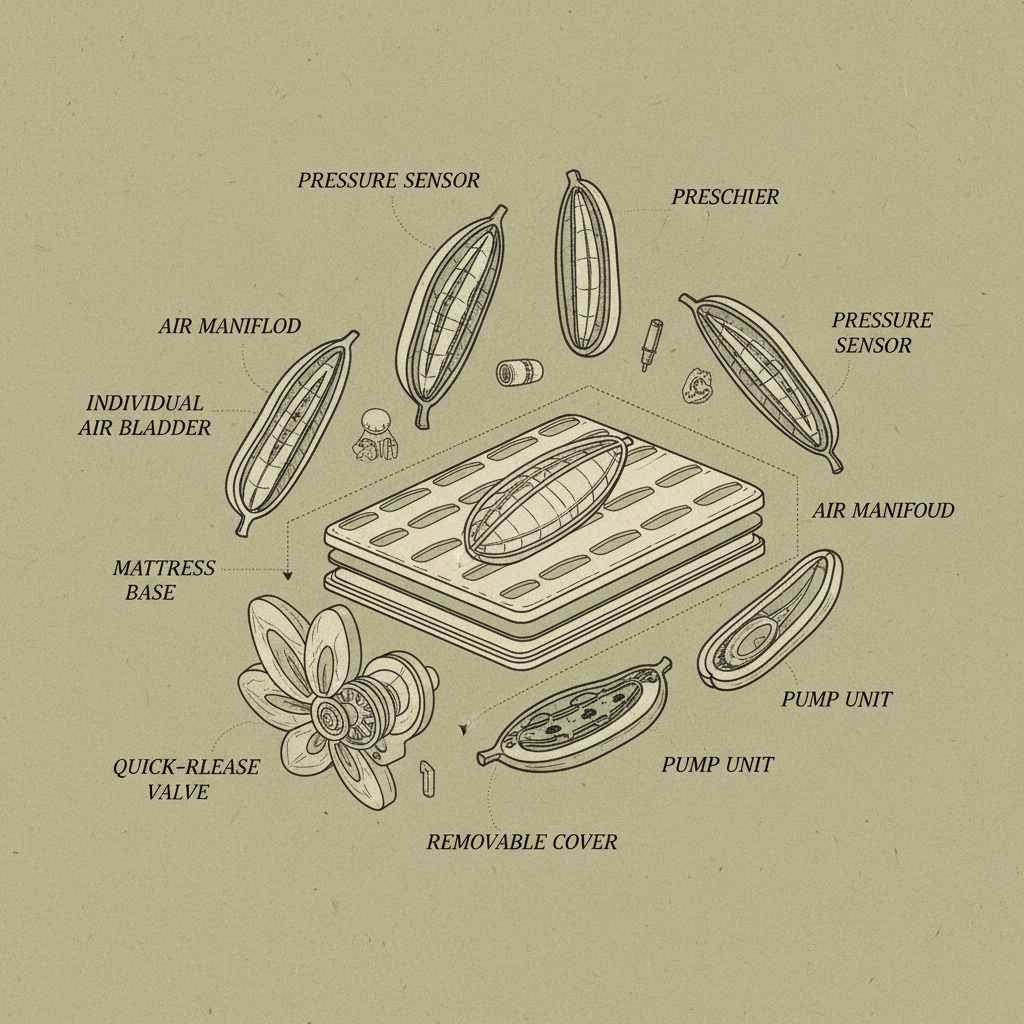
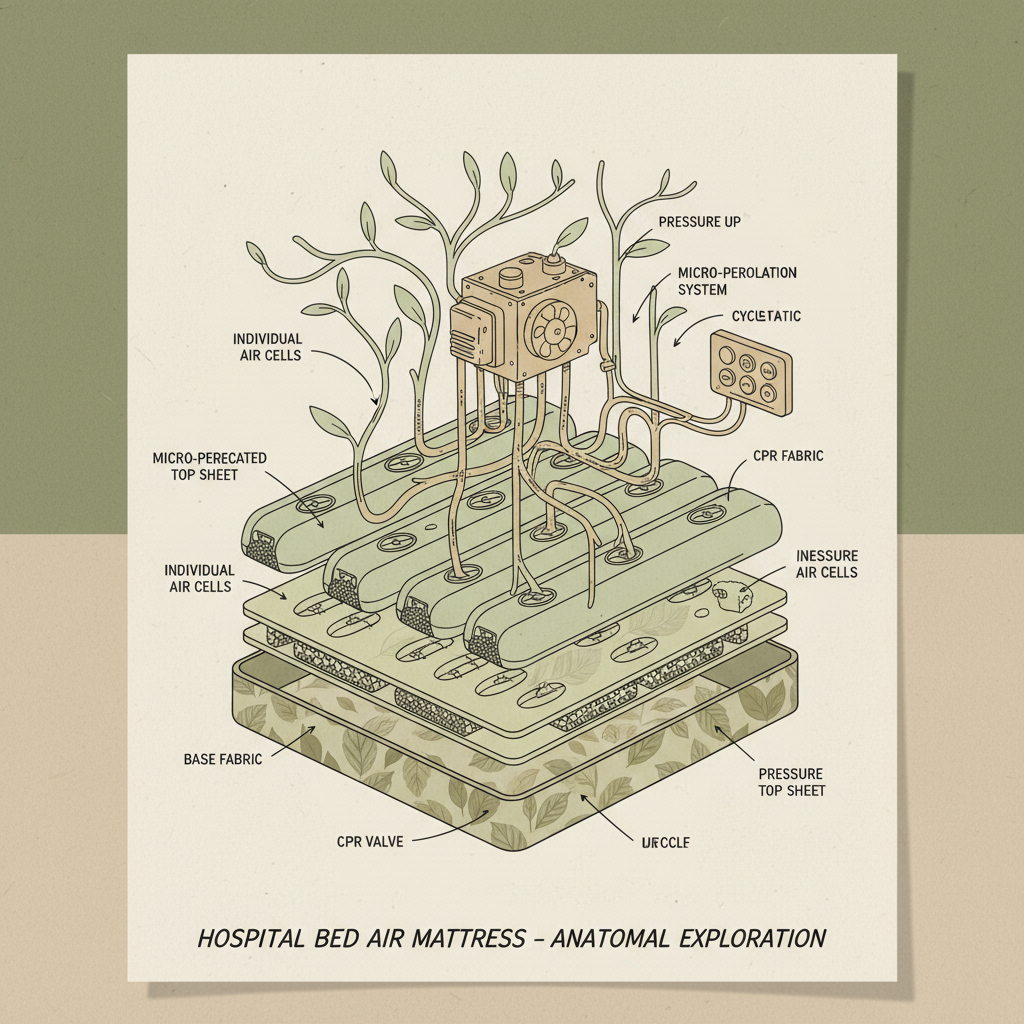
Okay, so a hospital air mattress for sale isn’t just a fancy inflatable bed. It's a medical device designed to prevent and treat pressure ulcers – bedsores. They work by distributing a patient’s weight over a larger surface area. It's about controlling the airflow within the air cells. More air in certain zones, less in others, constantly adjusting to the patient’s movements.
It’s connected to a pump that regulates the pressure, and that pump is critical. A noisy pump drives everyone crazy. And a pump that can't maintain consistent pressure? Forget it. That defeats the whole purpose. It's crucial in modern healthcare settings for patients at risk.
There's also the static versus alternating aspect. Static ones just maintain a constant pressure, while alternating ones cycle the pressure, mimicking natural movement. Alternating are better for long-term care, but static can be good for short-term acute situations.
Key Features Influencing Hospital Air Mattress for Sale
Durability is huge. We’re talking about a product that needs to withstand 24/7 use, constant cleaning, and potential punctures. The weld quality on the air cells is paramount. I once saw a mattress where the welds started to fail after just a month – a disaster.
Scalability matters too. Hospitals need to be able to quickly get more mattresses if they have a surge in patients – like during flu season. A manufacturer that can’t deliver quickly is going to lose business. I encountered this at a big hospital in Boston last winter. They were completely unprepared for the spike in cases.
Cost-efficiency is always a factor, but you can’t sacrifice quality. It's a balancing act. And infection control – absolutely vital. The materials have to be antimicrobial, and the surface needs to be easy to disinfect. And strangely, a lot of manufacturers don't think about the cleaning process when they're designing the mattress.
Global Applications & Real-World Use Cases
These aren't just for hospitals, you know? Long-term care facilities, nursing homes, even home healthcare – there’s a huge demand. I've seen them used in field hospitals during disaster relief efforts, which is where reliability really matters.
In post-disaster relief operations, you need something that’s lightweight, easy to deploy, and can provide basic comfort to patients who have lost everything. I've seen them used in remote industrial zones, too, for workers who are injured on the job.
There’s a growing market in developing countries, where access to quality healthcare is limited. But those markets are price-sensitive, so you need to find a way to offer a durable product at an affordable price. That’s the challenge.
hospital air mattress for sale Performance Metrics
The Long-Term Value Proposition of hospital air mattress for sale
Look, it’s an investment, right? Preventing bedsores is cheaper than treating them. And a comfortable patient is a happier patient. That translates to better outcomes and shorter hospital stays.
The peace of mind it gives the nursing staff is huge. They don't have to be constantly worrying about turning patients and checking for pressure points. They can focus on actual care. That’s the real value. It reduces liability for the hospital, too.
Innovations and Future Trends in Air Mattress Technology
I'm seeing a lot of work on integrating sensors into the mattresses to provide real-time pressure mapping data. That’s cool, but it needs to be user-friendly. Doctors and nurses don’t want to be staring at a screen all day.
There’s also a push towards more sustainable materials. Using recycled plastics, biodegradable polymers… It’s good for the environment, and it’s good for PR. But it has to perform just as well as the traditional materials. Anyway, I think the biggest thing will be better pump technology – quieter, more efficient, more reliable.
Challenges, Solutions, and Material Considerations
The biggest challenge? Cost. Getting a high-quality mattress that's also affordable is tough. And punctures are always a concern. I've seen mattresses get punctured by everything from IV lines to fingernails. Reinforcing the material is key, but you don't want to make it too stiff.
Material-wise, we're seeing a shift towards TPU (thermoplastic polyurethane) over PVC. It’s more durable, more flexible, and doesn’t have that nasty plastic smell. It’s also easier to weld, which means fewer leaks. Later... Forget it, I won't mention it about the vendor in Shenzhen…
Another thing is maintenance. Hospitals need to have a system for regularly inspecting and repairing the mattresses. A preventative maintenance program can extend the life of the mattress and save money in the long run.
Summary of Key Material Properties for Hospital Air Mattresses
| Material Type |
Durability Score (1-10) |
Cost Factor (Low/Medium/High) |
Chemical Resistance |
| PVC |
4 |
Low |
Poor |
| Polyurethane |
7 |
Medium |
Good |
| TPU |
9 |
Medium/High |
Excellent |
| Nylon Reinforced PVC |
6 |
Low/Medium |
Moderate |
| Silicone Coated Fabric |
8 |
High |
Excellent |
| Bi-PU (Bio-Polyurethane) |
7 |
Medium/High |
Good |
FAQS
That's a good question. Static mattresses provide constant pressure, ideal for acute situations or shorter stays. Alternating ones, on the other hand, cycle the pressure, mimicking natural movement. This is fantastic for long-term care patients where bedsores are a major concern. It promotes circulation and reduces pressure buildup over time. However, they can be a bit less comfortable initially because of the shifting sensation.
That depends on the material. PVC is a pain – it gets sticky and cracks easily with harsh disinfectants. Polyurethane and TPU are much better. Look for mattresses with sealed seams and smooth surfaces. You want something you can wipe down quickly and effectively without damaging the material. And, of course, the cover needs to be removable and washable. If it's a hassle to clean, nurses won't do it consistently.
Honestly, it varies a lot. With proper maintenance – regular inspection, cleaning, and repair – you can get 5-7 years out of a good quality mattress. Cheaper models, especially those made with PVC, might only last 2-3 years. Punctures are the biggest killer, so training staff on proper handling is critical. And having a repair kit on hand is always a good idea.
Absolutely. Most manufacturers offer some level of customization. Last month, that small boss in Shenzhen who makes smart home devices insisted on changing the interface to Type-C for some reason, and the result was a delayed delivery and a lot of headaches. But more realistically, you can usually adjust the length and width to fit specific beds or patient needs. You can also request different types of pump controls or add extra features like side rails.
You want to see certifications like ISO 13485 (for medical device quality management) and compliance with relevant electrical safety standards. It's also important to check if the mattress meets flammability requirements. A good manufacturer will be able to provide documentation to verify that their product meets all applicable safety regulations. Don’t take their word for it – ask for proof.
Definitely. Bariatric patients require mattresses with higher weight capacities and wider widths. The air cells need to be reinforced to provide adequate support. You also want to consider the distribution of pressure – it’s even more critical for larger patients. And the pump needs to be powerful enough to inflate and deflate the mattress quickly and efficiently. You don't want to be waiting ten minutes for it to adjust.
Conclusion
So, yeah, hospital air mattresses for sale aren’t glamorous, but they're absolutely essential. Preventing bedsores, improving patient comfort, reducing liability… it all adds up. The market’s changing, with a focus on durability, infection control, and sustainability. And there’s a lot of innovation happening in terms of sensors and pump technology.
Ultimately, whether this thing works or not, the worker will know the moment he tightens the screw. Visit our website for a wide selection of hospital air mattresses for sale: chuangenmedical.com.