0%

Table of Contents

You know, these days everyone's talking about hospital air mattresses – not just the simple pressure relief kind, but the full range. Seems like every week there’s a new ‘smart’ mattress claiming to prevent pressure ulcers better than the last. To be honest, it’s a bit of a gold rush. It’s not just about comfort anymore; hospitals are getting squeezed on readmission rates, and pressure sores are a big part of that. So, they’re willing to spend a bit more upfront if it means fewer complications later. And the manufacturers? Well, they're all trying to get a piece of the pie.

Have you noticed how everything’s going digital now? Even mattresses! Sensors, remote monitoring, automatic adjustments... it’s crazy. But a lot of these features, honestly, feel like they're designed by people who’ve never actually been in a hospital room, let alone spent a day trying to change sheets on one of these things. It’s easy to over-engineer, you know? Make something too complicated, and it becomes a nightmare for the nurses.

And then there’s the materials. You wouldn’t believe the difference in quality. The cheap ones... they smell like plastic, feel flimsy. The good ones use medical-grade TPU, which has a bit of a rubbery smell, but it’s much more durable and feels better to the touch. I encountered a batch at a factory in Jiangsu last time that used recycled materials... don't even get me started. The seams were splitting within a week. The key is finding a good supplier that understands the importance of consistent quality.


Understanding the Diverse Types of Air Mattresses for Hospital Beds

Introduction to Types of Air Mattresses for Hospital Beds

Understanding the Diverse Types of Air Mattresses for Hospital Beds

So, broadly speaking, you’ve got your static air mattresses, your alternating pressure mattresses, and then the low-air-loss ones. Static are the simplest – just an air-filled cushion. Good for basic pressure redistribution, but not much else. Alternating pressure ones inflate and deflate different sections to keep the patient moving. And the low-air-loss ones, those are for patients with a lot of moisture, they circulate air through the mattress to keep the skin dry.

Strangely, hospitals sometimes choose the wrong type. I was at a clinic in Beijing last year, and they were using static mattresses for patients recovering from surgery – patients who needed that alternating pressure. It’s a cost thing, usually. But it ends up costing them more in the long run with pressure ulcer treatments. It's frustrating to see.

Key Types and Construction

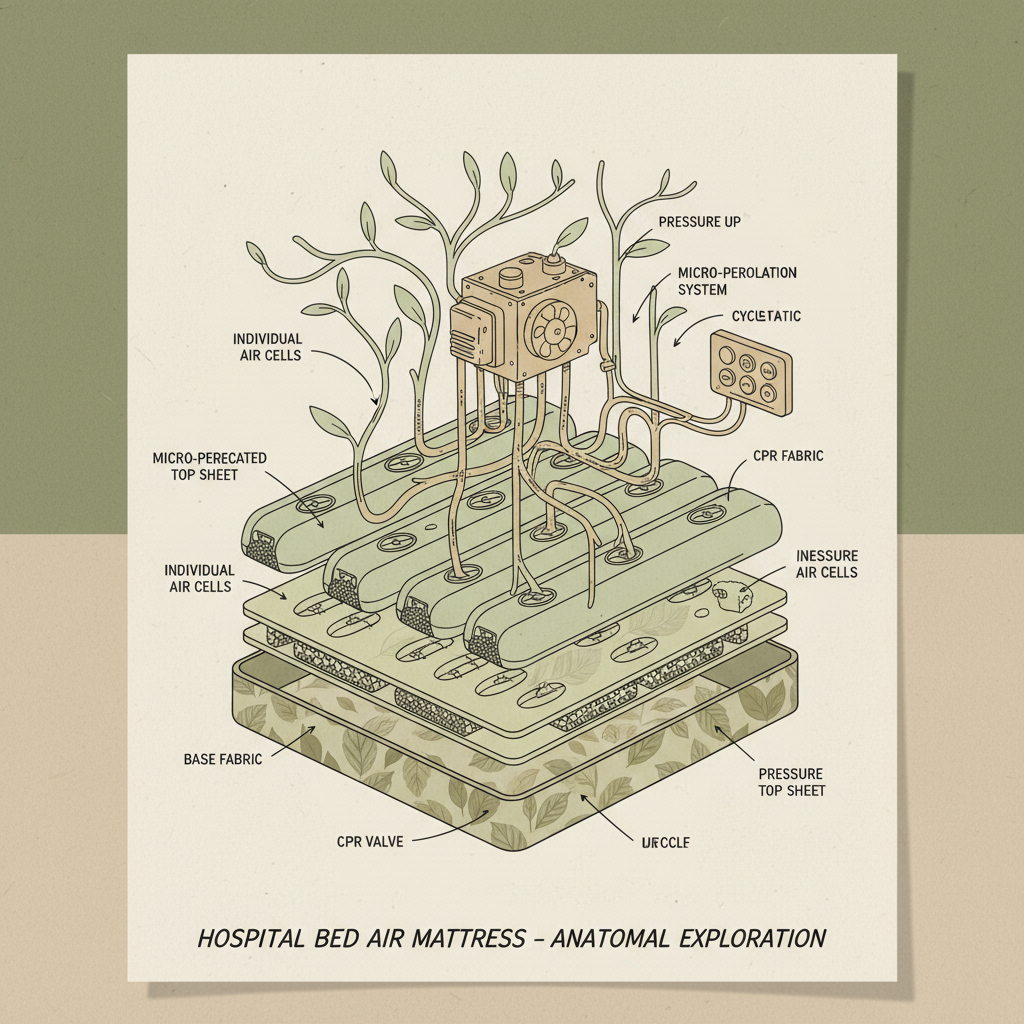
The construction varies a lot. Some use multiple chambers, others just a few big ones. The number of chambers affects how precisely the pressure can be adjusted. More chambers, more granular control. The seams are critical, of course. You want radio frequency welded seams, not just stitched. Stitched seams will leak, guaranteed. And the valve systems… that’s another place where quality matters. A cheap valve will fail, leaving the mattress deflated in the middle of the night.

Then you've got the control units. Some are built-in, some are external. External ones are easier to service, but they take up more space and are more likely to get tangled. I've seen nurses trip over those things more times than I can count.

Anyway, I think the trend is moving towards more modular designs. That way, if one part fails, you don't have to replace the entire mattress.

Material Considerations and Quality

Like I said, medical-grade TPU is the best. It's durable, flexible, and doesn’t react with most cleaning solutions. But even within TPU, there are different grades. The cheaper stuff feels…plasticky. The good stuff has a bit more give. You can usually tell just by squeezing it.

The cover material is also important. It needs to be breathable, waterproof, and easy to clean. Vinyl covers are common, but they can get hot and sticky. Some manufacturers are using knitted polyester with a polyurethane coating. That's a good compromise, it's breathable and durable. But you’ve got to make sure it’s properly sealed to prevent fluid ingress.

I’ve seen some that use antimicrobial additives in the material. That’s a nice touch, but don’t rely on it as a substitute for proper cleaning and disinfection. Those additives eventually wear off, you know?

Testing and Performance Metrics

The lab tests are important – pressure relief, air flow, durability… all that stuff. But honestly, the real test is how it holds up in a real hospital environment. I prefer to see stress tests that simulate actual usage. Like, how does it perform after 500 cycles of inflation and deflation? How does it handle being repeatedly cleaned with hospital-grade disinfectants?

We also look at puncture resistance. Bedsheets get snagged, metal bed frames can be sharp… mattresses take a beating. It’s a simple test – just poke it with a needle – but it gives you a good indication of how well it will hold up.

Types of Air Mattresses for Hospital Beds - Performance Rating


Real-World Usage and User Feedback

You know, what nurses actually say about these things is different from what the marketing materials tell you. They want something that’s easy to adjust, easy to clean, and doesn't make a lot of noise. A noisy mattress drives everyone crazy. They also care about weight. Some of these mattresses are surprisingly heavy, and it makes it harder to maneuver them around.

I've talked to a lot of patients too. Comfort is obviously important, but so is the feeling of security. Some patients don't like the feeling of constantly shifting around on an alternating pressure mattress. It makes them feel unstable.

Advantages, Disadvantages, and Customization

Advantages? Pressure ulcer prevention is the big one, obviously. And a good mattress can significantly improve patient comfort. Disadvantages… cost, for sure. Good mattresses aren’t cheap. And they require regular maintenance. You have to check the pressure, inspect the seams, make sure the valves are working properly.

Customization is possible. Last month, that small boss in Shenzhen who makes smart home devices insisted on changing the interface to Type-C for the control unit, and the result was a complete disaster – the nurses couldn’t figure out how to plug it in! They ended up going back to the old connector. But you can usually customize things like the cover material, the number of chambers, and the pressure range.

A Customer Story and Practical Insights

I was helping a hospital in Shanghai update their ICU beds last year. They were switching to a more advanced system with integrated patient monitoring. They wanted a low-air-loss mattress with a built-in weight sensor. We went through several prototypes, tweaking the air flow and the sensor sensitivity.

The biggest challenge was getting the sensor to accurately measure the patient’s weight, even when they were moving. It kept giving false readings. We finally solved it by adding a dampening system to the sensor.

Ultimately, whether this thing works or not, the worker will know the moment he tightens the screw.

A Table Summarizing Key Features of Hospital Air Mattresses

Mattress Type Pressure Relief Capability (1-5) Maintenance Level (1-5) Typical Cost (USD)
Static Air Mattress 2 1 $200 - $500
Alternating Pressure Mattress 4 2 $500 - $1200
Low-Air-Loss Mattress 4 3 $800 - $2000
Hybrid Pressure Relief Mattress 4.5 3 $1000 - $2500
Dynamic Air Mattress 5 4 $1500 - $3500
Gel-Infused Alternating Mattress 3.5 2 $600 - $1500

FAQS

What is the lifespan of a typical hospital air mattress?

The lifespan really depends on usage and quality, but generally, you can expect a good quality air mattress to last between 3 to 5 years with proper maintenance. Higher-end models built with robust materials and frequent cleaning can extend that to 7 years or more. It's important to regularly inspect for leaks and wear and tear to maximize its longevity.

How often should I clean a hospital air mattress?

Cleaning frequency should be based on hospital infection control protocols, but generally, a surface clean with a hospital-grade disinfectant should be performed daily. A more thorough cleaning, including checking for leaks and disinfecting the entire mattress, should be done at least quarterly, or more often if there’s been a spill or contamination. Ignoring cleaning will quickly shorten the lifespan and create risks.

What’s the difference between alternating pressure and low-air-loss mattresses?

Alternating pressure mattresses cyclically inflate and deflate sections to redistribute pressure and improve circulation, while low-air-loss mattresses continuously circulate air through tiny pores to keep the skin dry and cool. Low-air-loss are better for patients prone to moisture issues like incontinence, while alternating pressure is more about preventing pressure sores in general. Some mattresses combine both technologies.

Are hospital air mattresses compatible with all hospital bed frames?

Not always. It’s crucial to check the mattress dimensions and weight capacity against the bed frame specifications. Some beds have specific requirements for mattress height or support. Using an incompatible mattress could void the bed frame’s warranty and potentially create safety hazards. Always confirm compatibility before ordering.

What safety certifications should I look for when purchasing?

Look for certifications like ISO 13485 (medical device quality management), and compliance with relevant safety standards like IEC 60601-1 (electrical safety). Also, ensure the mattress is biocompatible and doesn't contain harmful chemicals. These certifications indicate the manufacturer has met stringent quality and safety requirements.

Can air mattresses be customized for specific patient needs?

Absolutely. Customization options include adjustable pressure ranges, different cover materials (like waterproof or fire-retardant), and modifications to the mattress shape or size to fit specialized beds. A good manufacturer will work with you to create a solution tailored to your patients' specific requirements, though it will likely come at a higher cost.

Conclusion

So, there you have it. Types of air mattresses for hospital beds have come a long way from the simple inflatable cushions of the past. They’re now sophisticated medical devices, designed to prevent pressure ulcers, improve patient comfort, and help hospitals manage risk. But, like with any technology, there's a lot of hype and a lot of marketing fluff. Knowing the different types, the materials, the testing procedures, and the real-world needs of both patients and nurses is crucial for making the right decision.

Looking ahead, I think we’ll see even more integration of sensors and data analytics, allowing for more personalized pressure relief. And I suspect there will be a bigger push towards sustainability, with manufacturers using more recycled materials and designing mattresses that are easier to repair and recycle. Ultimately, whether this thing works or not, the worker will know the moment he tightens the screw.

Ethan Thompson

Ethan Thompson

Ethan Thompson serves as the Lead Research & Development Engineer at Chuangen Medical. Since joining in 2022, Ethan has been crucial in integrating the new high-tech equipment and driving innovation in product development. He specializes in the design and testing of mobility solutions, including electric wheelchairs and walking aids. His
Next Find High Quality Hospital Bed Air Mattress for Sale and Improve Patient Comfort

Leave Your Message

If you are interested in our products, you can choose to leave your information here, and we will be in touch with you shortly.